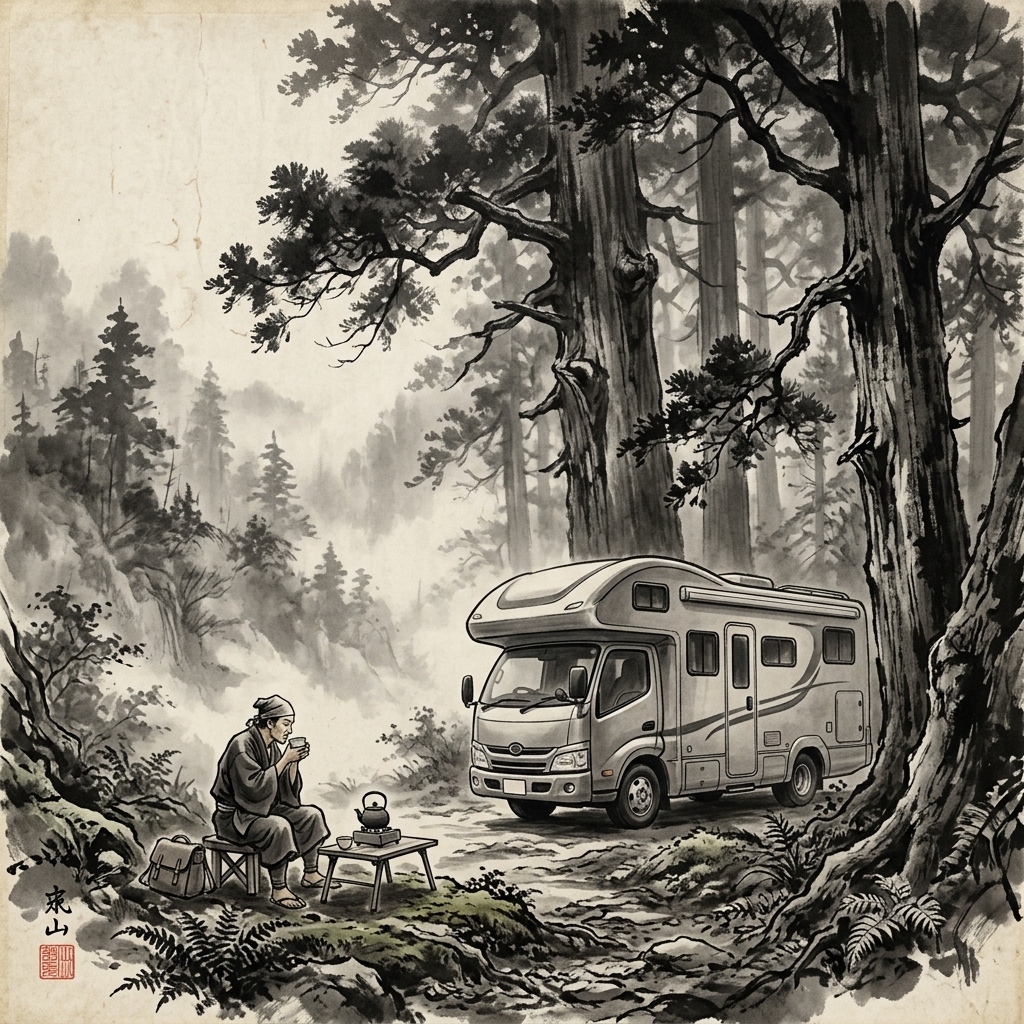
Kyushu is arguably Japan's best island for a road trip. Active volcanoes, world-class hot springs, dramatic gorges, and some of the country's best food, all connected by uncrowded, scenic roads. Here's the itinerary we recommend to every renter who picks up a van from our Fukuoka base.
Day 1: Explore Fukuoka, the Gateway City
Pick up your campervan near Fukuoka Airport (we're 10 minutes away). Spend the day getting oriented:
- Ohori Park: beautiful lakeside park, perfect for a morning stroll
- Dazaifu Tenmangu: iconic shrine surrounded by plum trees (30 min drive)
- Yatai stalls: end the evening at Fukuoka's famous outdoor food stalls along the Naka River
Where to sleep: Park at a nearby Michi-no-Eki or RV Park outside the city center. Many stations tolerate a quiet night's rest in your vehicle (no tents or cooking outside), but some ban overnight stays, so check our Michi-no-Eki guide first.
Day 2: Fukuoka → Aso (2.5 hours)
Head southeast toward one of the world's largest volcanic calderas. The drive through Kumamoto Prefecture is gorgeous, with rolling green hills that open up into the massive Aso caldera.
- Aso Nakadake Crater: drive up to see the smoking volcanic crater (check access conditions)
- Kusasenri Grassland: wide-open grassland perfect for a sunset walk
- Aso Farm Land: unique dome-shaped accommodations and hot springs
Where to sleep: Aso has several auto-campsites with stunning caldera views.
Day 3: Aso → Takachiho Gorge (1.5 hours)
One of Japan's most breathtaking natural wonders. The basalt gorge with its 17-meter waterfall is a must-see.
- Rowboat ride: paddle through the gorge beneath the waterfall (¥5,100 for 30 min, arrive early)
- Amano Iwato Shrine: the cave from Japanese mythology where the sun goddess hid
- Takachiho Night Kagura: traditional dance performance at the shrine (nightly at 20:00)
Where to sleep: Michi-no-Eki Takachiho, close to the gorge, tolerates a quiet night's rest in your vehicle (no tents or cooking outside); check its station page before you go.
Day 4: Takachiho → Beppu (2.5 hours)
Drive northeast to Japan's hot spring capital. Beppu produces more hot spring water than any other city in the world.
- Jigoku Meguri (Hell Tour): visit 7 unique, colorful hot spring pools
- Beppu Beach Sand Bath: get buried in naturally heated volcanic sand
- Local onsen: soak in one of Beppu's many public baths (from ¥200)
Where to sleep: Several RV parks in Beppu with power hookups.
Day 5: Beppu → Yufuin → Kurokawa Onsen (2 hours)
A day of scenic mountain driving through some of Kyushu's most beautiful inland terrain.
- Yufuin: charming onsen town with boutique shops, Kinrin Lake, and Mt. Yufu views
- Yamanami Highway: one of Japan's most scenic drives, connecting Beppu to Aso
- Kurokawa Onsen: traditional onsen village with rotenburo (outdoor baths) connected by forest paths
Where to sleep: Michi-no-Eki Oguni, a short drive from the village, tolerates a quiet night's rest in your vehicle (no tents or cooking outside); check its station page before you go.
Day 6: Kurokawa → Itoshima Coast (3 hours)
Head back toward Fukuoka via the beautiful Itoshima Peninsula for a contrast of mountain and sea.
- Futamigaura Beach: famous "couple rocks" with a torii gate at sunset
- Seaside cafes: Itoshima is known for trendy beachside spots
- Sakurai Futamigaura: one of the most photographed spots in Kyushu
Where to sleep: Book a campsite or RV park for the night, or pick an overnight stop on your route from our Michi-no-Eki guide.
Day 7: Itoshima → Fukuoka (Return)
Final morning by the sea, then return the van in Fukuoka. Last-minute stops:
- Itoshima morning market: fresh seafood and local produce
- Hakata ramen for lunch: end your trip with the city's signature dish
- Return the van: drop off at our Fukuoka base near the airport
💰 Budget Estimate (7 days)
- Campervan rental: ~¥154,000 (¥22,000/day)
- Gas: ~¥10,000-15,000
- Tolls (with ETC discount; our ETC card is free if you request it in advance): ~¥8,000-12,000
- Campsites/RV parks: ~¥7,000-15,000
- Food: ~¥7,000-14,000
- Total: ~¥186,000-210,000 (before onsen and activities; see how it compares with hotels in our cost breakdown)
Why a Campervan?
A campervan is the best way to experience this itinerary. Here's why:
- Flexibility: no hotel reservations needed; stop for the night along your route at a campsite, an RV park or a Michi-no-Eki that tolerates a quiet night in your vehicle
- Cost savings: accommodation is built into the vehicle
- Morning views: wake up at the rim of a volcano or beside the ocean
- Convenience: cook your own meals, change plans on the fly
Frequently Asked Questions
How many days do you need for a Kyushu road trip?
7 days is ideal for covering the main highlights including Fukuoka, Mount Aso, Beppu, Takachiho Gorge, and the coast. 5 days works for a faster trip, and 10-14 days allows a more relaxed pace with detours to Nagasaki and Kagoshima.
Is it easy to drive in Kyushu?
Yes. Kyushu has well-maintained roads with clear signage in English. Traffic is lighter than Tokyo or Osaka. You drive on the left side. Most visitors need an International Driving Permit, but licenses from Germany, France, Switzerland, Belgium, Monaco and Taiwan need an official Japanese translation instead.
What is the best time of year for a Kyushu road trip?
Spring (March-May) for cherry blossoms, and autumn (October-November) for foliage are the best. Summer is hot and humid with occasional typhoons. Winter is mild but some mountain roads may be icy.