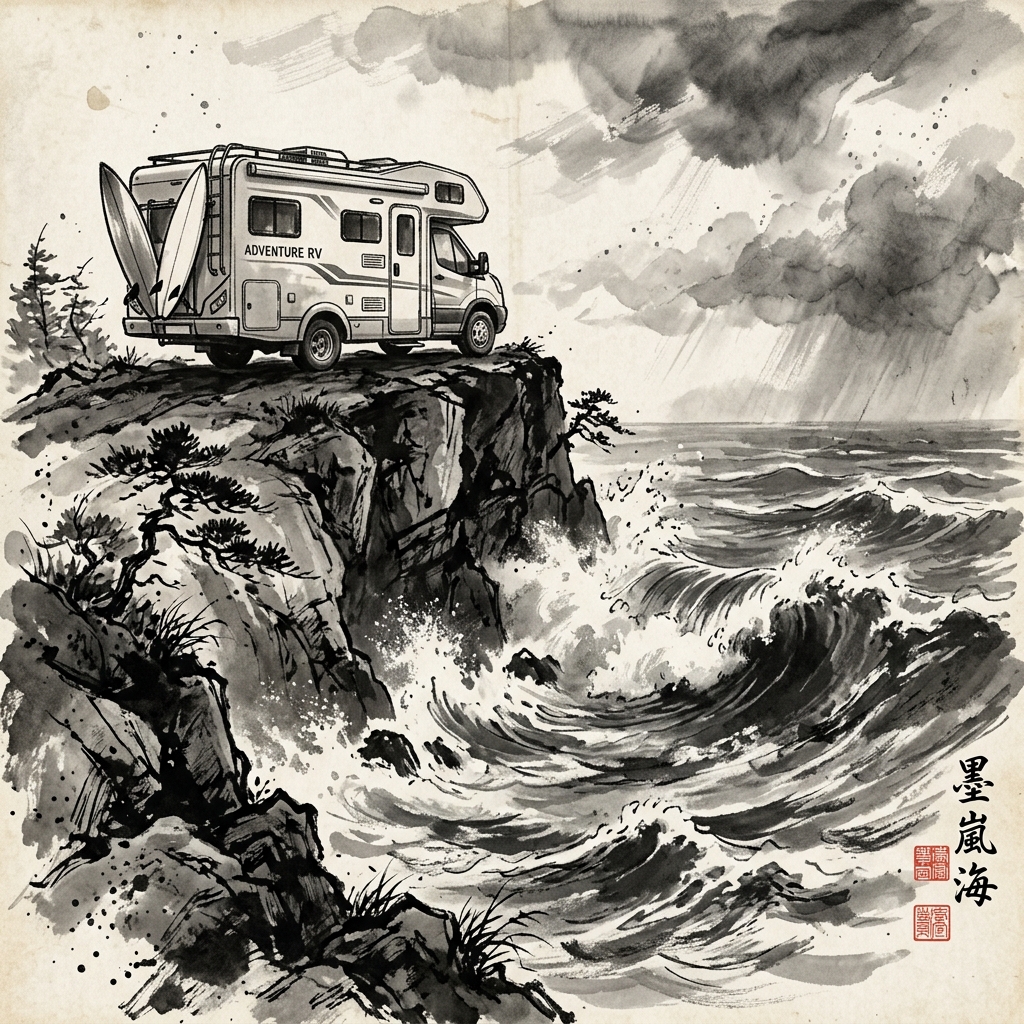
Miyazaki Prefecture offers Kyushu's most tropical coastline — palm-tree-lined roads, surf beaches, and the iconic Devil's Washboard rock formations of Aoshima Island. The drive from Fukuoka takes about 3.5 hours, making it an easy 2-3 day campervan extension.
Quick Facts
| Detail | Info |
|---|---|
| Distance from Fukuoka | Approx. 310 km via expressway |
| Drive time | 3.5 hours (expressway) / 5 hours (coastal route) |
| Best season | March–November (warmest in Kyushu) |
| Overnight parking | Michi-no-Eki Phoenix (free), Michi-no-Eki Nango |
| Highlights | Aoshima Shrine, Devil's Washboard, Udo Shrine, Cape Toi, Hyuga surf |
Aoshima Island: The Tropical Shrine
Aoshima is a tiny island (周囲 1.5 km) connected to the mainland by a pedestrian bridge. It is home to Aoshima Shrine, surrounded by subtropical Betel palms — the northernmost naturally growing Betel palms in the world. The island is completely encircled by the Devil's Washboard (Oni no Sentakuita), concentric rings of wave-eroded sandstone estimated to be 7 million years old. At low tide, you can walk directly on the exposed rock formations — an experience unlike anything else in Japan.
The shrine itself is dedicated to mountain and sea deities and is popular for romantic blessings (en-musubi). The colorful ema (prayer plaques) and subtropical setting create a distinctly un-Japanese atmosphere that feels more like Southeast Asia.
Parking: Free public parking is available within a 5-minute walk of the bridge to the island. On weekends and holidays, arrive before 10am to secure a spot.
Nichinan Coast: Japan's Forgotten Riviera
South of Aoshima, the Nichinan Coast (日南海岸) stretches for about 100 km along the Pacific. This dramatic coastline of sea cliffs, hidden coves, and roadside palm trees is often compared to the Amalfi Coast — but with virtually no tourists. Key stops along the drive:
- Horikiri Pass (堀切峠): The iconic viewpoint overlooking the Devil's Washboard from above. Free parking, photo opportunity
- Sun Messe Nichinan: A hilltop park with replica Easter Island moai statues overlooking the ocean. Entry approx. 1,000 yen
- Udo Jingu Shrine (鵜戸神宮): A Shinto shrine built inside a natural sea cave on a cliff face. One of Kyushu's most unique sacred sites. Visitors throw undama (lucky clay balls, 5 for 100 yen) into a rope circle on the rocks below
- Obi Castle Town (飫肥城下町): A well-preserved Edo-period samurai district with stone walls, traditional houses, and local specialty obi-ten (fried fish cake). Walking map available at the tourist center
Cape Toi & Wild Horses
At the southern tip of the Nichinan Coast, Cape Toi (都井岬) is home to about 100 wild Misaki horses — one of only a few wild horse populations in Japan. These horses have roamed the cape freely since the 18th century when they were bred by the local feudal domain. You can observe them grazing on the grassy headlands with the Pacific Ocean as a backdrop. Entry to the cape area is approx. 400 yen per vehicle.
Hyuga: Surf Town & Coastal Trails
North of Miyazaki city, Hyuga (日向) is a laid-back surf town with excellent waves and a charming Hyuga Misaki Lighthouse trail. The Umigame (sea horse) rock and Kurusu-no-Umi (Cross Sea) are natural formations worth stopping for. The town has a relaxed atmosphere with local seafood restaurants and craft beer spots.
Surfing: Miyazaki is one of Japan's premier surfing destinations. The warm Kuroshio Current provides mild water temperatures and consistent swells. Board and wetsuit rentals are available at shops near Kizaki Beach (approx. 3,000-5,000 yen/day). Beginners can book lessons from about 5,000 yen.
Suggested 3-Day Itinerary
- Day 1: Drive from Fukuoka or Mount Aso to Miyazaki city (3-3.5 hours). Visit Aoshima Island and Devil's Washboard. Sunset at Horikiri Pass. Sleep at Michi-no-Eki Phoenix (free parking, botanical garden, restrooms)
- Day 2: Morning at Sun Messe Nichinan. Udo Shrine mid-morning. Lunch at Obi Castle Town (try obi-ten). Afternoon drive to Cape Toi for wild horses. Sleep at Michi-no-Eki Nango or a beachside campground
- Day 3: Drive north along the coast to Hyuga. Surf or explore the coastal trail. Continue to Beppu & Yufuin (2.5 hours from Hyuga) or return to Fukuoka via expressway
Where to Eat
- Chicken Nanban (チキン南蛮): Miyazaki's signature dish — fried chicken with sweet vinegar and tartar sauce. Originated at Nobeoka's Naojiri restaurant. Available everywhere in the prefecture
- Miyazaki Mango: Premium local mangoes available April–August. Try mango parfait at cafes near Aoshima
- Obi-ten (飫肥天): Sweet fried fish cake unique to Obi town. Buy fresh at shops in the castle town for about 100-200 yen each
- Jidori (地鶏): Free-range local chicken, often served as charcoal-grilled jidori tataki
Frequently Asked Questions
Is Miyazaki warm year-round?
Miyazaki has a subtropical climate and is the warmest prefecture in Kyushu. Average winter temperatures are 8-12°C, and summer reaches 28-32°C. It is comfortable for campervan travel from March through November, with the best weather in April-May and October-November.
Can I combine Miyazaki with other Kyushu destinations?
Yes. Common combinations: Miyazaki + Mount Aso (2 hours west), Miyazaki + Beppu (2.5 hours north), or Miyazaki + Kagoshima/Sakurajima (2 hours south). A full 7-day Kyushu circuit typically includes 1-2 days on the Miyazaki coast.
Is there cell phone signal along the Nichinan Coast?
Signal is generally good along the main coastal road but can be patchy at Cape Toi and in forested areas. Download offline Google Maps for Miyazaki Prefecture before driving south.
Related Articles
- Kyushu Road Trip: 7 Days from Fukuoka
- Best Scenic Drives in Kyushu
- Kumamoto Castle & Aso: 3-Day Itinerary
- Where to Shower on a Campervan Trip
- Where to Park Overnight Legally
Add the Miyazaki coast to your Kyushu road trip
All-inclusive campervan rental from ¥22,000/day. ETC card, insurance, bedding, cooking gear — all included.
View Rental Options → 💬 Ask on WhatsApp