Japan is one of the most popular destinations for Israeli travelers — and increasingly, for Jewish travelers from North America, Europe, and elsewhere. The combination of exceptional safety, extraordinary natural landscapes, deep cultural richness, and a travel infrastructure that rewards independent exploration makes it a natural fit for the kind of deliberate, research-driven travel that characterizes many visitors from this background.
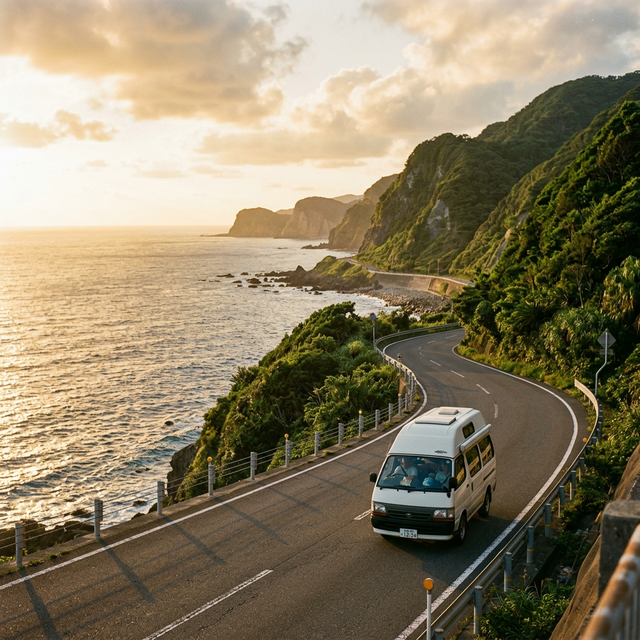
A campervan trip amplifies all of this. It removes the dependency on hotels and public transport schedules, allows dietary control through cooking facilities, and puts you in landscapes — volcanic calderas, coastal cliffs, mountain shrine paths — that you simply cannot reach otherwise.
This guide addresses the specific questions that come up most often, and shares the places in Kyushu that tend to resonate most deeply.
Kosher Food Strategy for a Japan Van Trip
Let's address this directly: strictly kosher-certified restaurants are rare in Kyushu. There are established kosher suppliers and restaurants in Tokyo and Osaka, and some cities have small Jewish communities with associated food resources, but rural Japan — which is where the most compelling van trip landscapes are — has none of this infrastructure.
The good news is that a campervan significantly changes the equation. With a cooking area inside the van, you can:
- Purchase fresh produce at Michi-no-Eki farm markets (vegetables, fruit — no certification concerns)
- Buy sealed, certified products at supermarkets (look for imported goods with kosher symbols — Israeli, American, and European products appear in international supermarkets in Fukuoka)
- Cook fish purchased from markets (sushi-grade fish fillets are widely available; avoid shellfish)
- Use the camping kitchen for full meal control
Before leaving Fukuoka: Stock up at COSTCO Fukuoka (which carries a range of imported packaged goods including some kosher-certified products), or at international supermarkets in the Tenjin area. This becomes your baseline for the trip, supplemented by fresh produce from roadside markets as you go.
For eating out: Vegetarian and vegan restaurants are increasingly common in tourist areas. Sushi restaurants (ordering only fish, not shellfish or roe mixed with non-kosher items) provide another option. Italian restaurants — which appeared specifically in the wishlist of one of our Israeli guests — often use dairy but not meat mixed with dairy, which may work for some interpretations of kashrut.
Onsen Culture: What to Know Before You Go
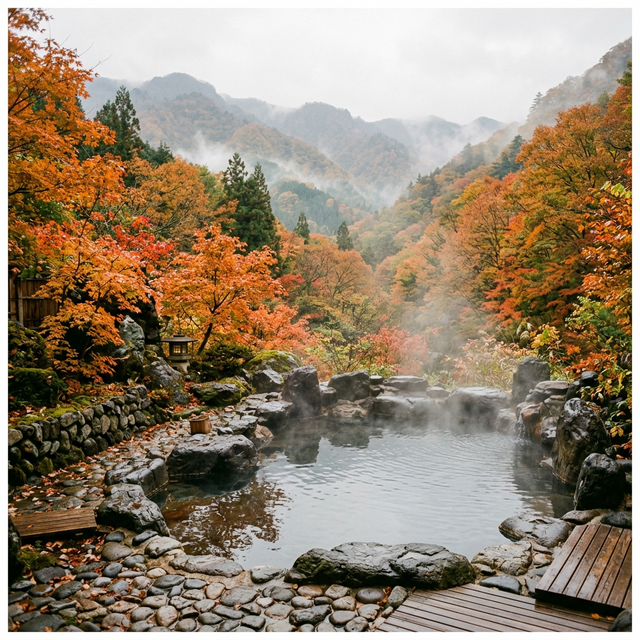
Onsen is a central experience of any Kyushu trip and something most international visitors want to try. The basic protocol: you wash thoroughly at a provided shower station before entering the bath, and you enter unclothed. Swimwear is not permitted at traditional onsen.
For travelers who find this unfamiliar or prefer more privacy, the standard solution is a kazoku buro (家族風呂) — a private family bath room rented by the hour, typically ¥500–1,500 extra beyond the base admission fee. These rooms contain a full bath, often with an outdoor element, and are entirely private. You book the room rather than the communal bath. Most onsen towns in Kyushu — Kurokawa, Kirishima, Beppu, Yufuin — have multiple facilities offering this option.
Tattoo policies vary by facility. Some onsen prohibit tattoos; others do not. Private kazoku buro rooms typically have no restrictions. If tattoos are a consideration, confirm before arrival or use private bath facilities.
Shabbat Planning on a Kyushu Van Route
Planning around Shabbat requires some advance thought on a van trip. A few approaches that work well:
- Anchor at a campsite for Shabbat: Book a campsite in advance for Friday night through Saturday evening. Kyushu has well-run campsites near most major destinations. This gives you a stable, private base — you can prepare food before Shabbat begins, rest without driving obligations, and observe as fully as you choose.
- Use a ryokan for Shabbat: A traditional Japanese inn near one of the major onsen towns removes driving from the equation entirely and provides meals (though not kosher) and a settled environment. Kurokawa, Yufuin, and Kirishima all have ryokan with good facilities.
- Michi-no-Eki overnight: Most rural Michi-no-Eki allow van overnight stays and are quiet on weekday Shabbatot. A station near a good walking area — caldera grasslands, coastal paths — means you can observe without needing the van on Saturday.
Sunset times in Kyushu vary by season and latitude. Fukuoka is at approximately 33.5°N — similar to Atlanta, Georgia, or Casablanca. Use a zmanim calculator with the specific city for precise Shabbat times throughout your trip.
Nagasaki Peace Park: Give It the Time It Deserves
For Israeli and Jewish visitors, Nagasaki Peace Park and the Atomic Bomb Museum are among the most significant sites in Japan — perhaps the most significant. This is not because the atomic bombing has a direct connection to Jewish history, but because the cultural habit of engaging seriously with sites of mass death and their documentation is deeply embedded in Israeli national life through the experience of Yad Vashem and Holocaust education.
The Nagasaki National Peace Memorial Hall documents the August 9, 1945 bombing in exceptional depth: survivor testimony, the decision-making chain, photographs, physical artifacts from the blast, and the years of suffering that followed. The structure of the experience — walk through history, confront political decisions, hear individual voices — is formally similar to what Israeli visitors know from memorial culture at home.
Plan at least 3 hours. Many visitors from Israel have told us they spent five. The outdoor Peace Park, the hypocenter monument, and the museum together form a coherent memorial complex. Do not rush it.
The Sites That Tend to Resonate Most
Based on what we've seen from Israeli and Jewish guests, these are the Kyushu experiences that leave the deepest impression:
Mount Aso — The Earth As It Actually Is
The active crater is a visceral reminder of geological reality — that the surface humans live on is temporary and dynamic. For visitors from a country where security and permanence are not taken for granted, there's something clarifying about standing at the rim of an active volcano. Aso has no artifice. It simply is.
Takachiho — Mythology as Landscape
Judaism, Christianity, and Islam are all religions of text and history. Japanese Shinto is a religion of place — specific mountains, specific rocks, specific rivers are where the divine presence lives. Takachiho, where Japanese mythology places the descent of the gods, offers a completely different model of how sacred geography works. Visitors who engage with this seriously find it genuinely thought-provoking rather than exotic.
Irome Kumano Shrine — The Path as Experience
The moss-covered stone torii path at Irome is a walking meditation in physical form. No explanation is required. You walk in, you feel something shift, you walk out. It requires no common religious background to understand.
Shinmeikan Cave Bath — Elemental and Private
The cave bath at Shinmeikan is available as a private booking, which resolves any modesty concerns. It is one of the most extraordinary onsen experiences in Japan — hand-carved from volcanic rock, hot spring-fed, silent underground. Worth planning around.
Practical Notes
Quick Reference
- Driving: An International Driving Permit (IDP) is required alongside your national license. Israeli licenses are valid with IDP. Our vans are automatic transmission, right-hand drive. Most guests adapt within 30 minutes.
- Payment: Japan remains heavily cash-based outside major cities. Have yen available. Many Michi-no-Eki markets are cash-only.
- Language: English is spoken at major tourist sites and by younger staff in cities. In rural areas, translation apps (Google Translate with camera function) are essential. Japanese people are consistently helpful to navigating visitors.
- SIM / data: A local SIM or Wi-Fi router is strongly recommended. Navigation by van requires data. We can advise on options at pickup.
- Emergency: Japan's emergency number is 110 (police) and 119 (fire/ambulance). Israel's Embassy is in Tokyo: +81-3-3264-0911.
Frequently Asked Questions
Is there kosher food available in Kyushu, Japan?
Kosher-certified restaurants are rare in Kyushu. However, a campervan with cooking facilities allows full dietary control — stock up on certified packaged goods in Fukuoka before departure, and supplement with fresh produce from Michi-no-Eki farm markets throughout the trip. Fish sushi (avoiding shellfish), vegetarian restaurants, and fresh vegetables provide workable daily options when eating out.
Can Jewish travelers use onsen hot springs in Japan?
Yes. Traditional onsen require bathing without swimwear, in separate male/female areas. For more privacy, private family baths (kazoku buro) are available at most onsen facilities throughout Kyushu for a small additional fee. These are fully private rooms rented by the hour, available without the communal bath experience.
What should Israeli and Jewish travelers know about Nagasaki Peace Park?
The Nagasaki Peace Park and Atomic Bomb Museum document the 1945 bombing in extraordinary depth, including survivor testimony, political decision-making documentation, and physical artifacts. For visitors from Israel, where Holocaust memorial education is a foundational national experience, the site resonates with particular depth. Allow at least 3 hours; many visitors from Israel spend considerably more. It is one of the most significant peace memorials in the world.