You don't need to climb Fuji to hike in Japan. Kyushu has short, well-marked trails that start where you can park a campervan, finish in half a day, and end with a hot spring. These are the two we send our guests to most often: Mt Raizan, 40 minutes from our base in Fukuoka, and Bogatsuru, a highland wetland in the Kuju mountains with a hot-spring lodge you can only reach on foot.
Both are realistic for reasonably fit walkers with normal trainers or light boots. No ropes, no permits, no guide required.
1. Mt Raizan (雷山): a half-day classic near Fukuoka
955 m · about 3–4 hours round trip · free parking
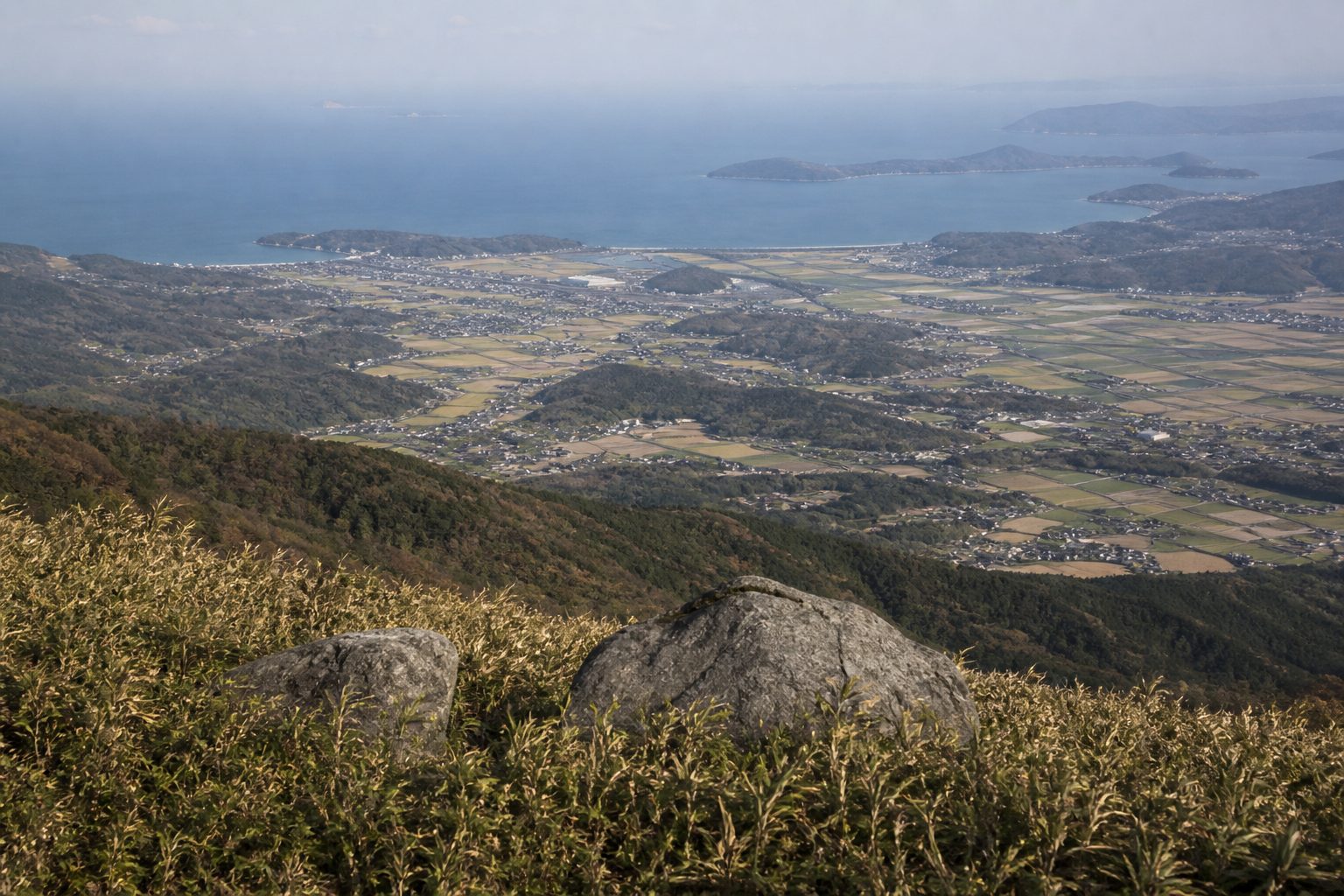
Raizan sits on the border of Itoshima and Saga, less than an hour from Fukuoka. The classic loop starts at the car park by Sennyoji Daihioin temple, follows a stream past the small Seiga waterfall, climbs through forest to a shrine, and reaches the summit ridge with views over the Genkai Sea. Coming down via the old ski-slope viewpoint makes it a loop rather than an out-and-back.
- Time: roughly 3–4 hours for the full loop, at a relaxed pace with photo stops.
- Terrain: mostly forest path, with some rocky sections, stream crossings and a few steep stretches. Beginner-friendly, but not a stroll. Trainers with grip are fine in dry weather; light boots are better after rain.
- Parking: a large free car park (around 150 spaces) near the temple. Easy for a compact campervan.
- Getting there: about 15 minutes from Maebaru IC on the expressway, roughly 40–50 minutes from Fukuoka city.
- Best seasons: spring green and autumn colour. The temple's 400-year-old maple in mid-to-late November is one of Kyushu's most famous autumn sights.
Why it works with a campervan: you can sleep near the Itoshima coast the night before, be at the trailhead early, and be back at the sea for lunch. Itoshima's beach cafés and hot springs are 20–30 minutes away.
2. Bogatsuru (坊ガツル): a highland basin and a hot spring you can only walk to
About 2 hours each way from Chojabaru · gentle · boardwalk sections
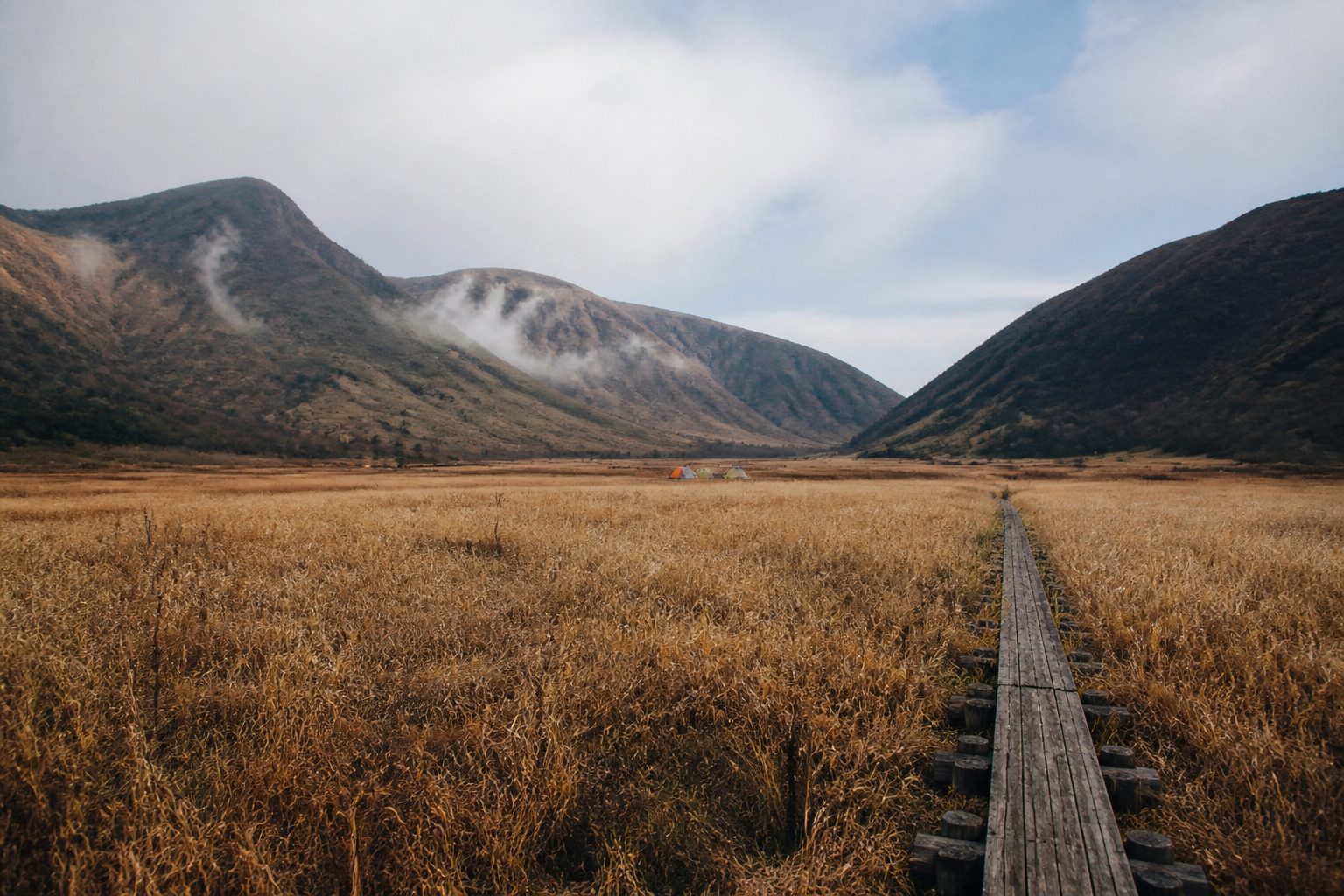
Bogatsuru is a wide grassy wetland sitting at around 1,200 m in the middle of the Kuju mountain range, ringed by peaks. It's a registered Ramsar wetland site and one of the most peaceful places in Kyushu. No road reaches it. Most walkers start at Chojabaru, where there is a visitor centre and parking, and follow a well-used trail with boardwalk sections and relatively little climbing.
- Time: around 2 hours each way. Very doable as a day walk if you start in the morning.
- Terrain: gentle by Japanese mountain standards, with a mix of gravel track, forest path and raised boardwalk across the marsh.
- The reward: Hokkein Onsen Sanso, a mountain lodge with natural hot-spring baths, right beside the wetland. You can stay overnight or, in many cases, use the baths as a day visitor. It's worth checking directly before you go.
- Camping: there is a free tent site at Bogatsuru itself, popular year-round. You carry everything in and out; there are no shops.
- Best seasons: the pink Miyama-kirishima azaleas in late May to early June are spectacular, and autumn grass turns gold in October.
Why it works with a campervan: park at Chojabaru, walk in with a light pack, soak at the lodge, and come back to a bed you didn't have to carry. If you'd rather stay up there, the tent site is free, but the van means you don't have to.
Planning to stay at the lodge or use the baths? Hours and availability change with the season, so confirm before you set off, and if you're renting with us and the phone line is Japanese-only, message Karen and we'll try to check for you.
Which one should you choose?
- Short on time, based in Fukuoka? Raizan. You can hike it and still be on the coast by afternoon.
- Want the "wow, we're really in the mountains" feeling? Bogatsuru, especially combined with Aso and Beppu on a Kyushu loop.
- Travelling in late May/early June? Bogatsuru, for the azaleas.
- Travelling in November? Raizan, for the maple at the temple.
What to bring (and what Japan does differently)
- Cash. Mountain lodges, small temples and rural car parks often don't take cards.
- Water and food. There are no shops on either trail. Convenience stores before the trailhead are your friend.
- Rain layer. Kyushu weather turns quickly, especially June's rainy season and typhoon season (Aug–Sep).
- Bear bell? Kyushu has no wild bears, which is a relief if you've hiked in Hokkaido or Honshu. Wasps in late summer are the thing to watch.
- Winter: the Kuju range genuinely freezes and gets snow. Without proper gear and experience, treat Bogatsuru as a spring-to-autumn walk.
- Tattoos: some hot springs still restrict them. Ask us and we'll point you to ones that don't.
Turning these into a road trip
Both hikes slot naturally into a Kyushu loop from Fukuoka:
- Day 1: Pick up the van, sleep near Itoshima's coast.
- Day 2: Hike Mt Raizan, onsen in the afternoon, drive towards Kuju.
- Day 3: Walk into Bogatsuru, soak at the mountain hot spring, back to the van.
- Day 4+: Continue to Aso's caldera, Beppu's steaming valleys or Takachiho's gorge.
See our 5–7 day Kyushu itinerary for the full route, or check van availability for your dates.
Frequently asked questions
Are there beginner-friendly hikes in Kyushu, Japan?
Yes. Mt Raizan near Fukuoka is a 3–4 hour forest loop with free parking at the trailhead, and Bogatsuru in the Kuju range is a gentle 2-hour walk each way with boardwalk sections. Neither requires a permit, a guide or technical equipment.
How long does it take to hike Mt Raizan?
About 3 to 4 hours for the full loop from the Sennyoji temple car park, including the summit and the viewpoint on the way down. It's roughly 40–50 minutes' drive from Fukuoka city.
Can you drive to Bogatsuru?
No, and that's the appeal. No road reaches the wetland. You walk in from Chojabaru in about two hours on a well-marked trail, which is why it stays so quiet. Park your campervan at the trailhead and walk in with a light pack.
Is there a hot spring at Bogatsuru?
Yes. Hokkein Onsen Sanso is a mountain lodge beside the wetland with natural hot-spring baths, reachable only on foot. Overnight stays and day bathing are usually possible, but hours and availability vary by season, so confirm before you go.
Do I need bear spray for hiking in Kyushu?
No. Kyushu has no wild bear population, unlike Hokkaido and Honshu. The main seasonal hazards are wasps in late summer and rapidly changing weather.
Can I sleep at the trailheads in a campervan?
Rules differ by car park and change over time, so never assume. Japan's michi-no-eki roadside stations are the reliable option for overnight parking, and we share a recommended overnight-spot guide with every rental.
Planning a hiking road trip in Kyushu? See our campervans and live availability → or ask Karen for a route suggestion on WhatsApp.