When we look at wishlists from international guests — especially those coming from Europe, the Middle East, or North America — Michi-no-Eki (道の駅) appear with striking frequency. Not one or two as an afterthought, but four, five, six specific stations, named and noted alongside volcanoes and shrines as deliberate destinations.
Japanese domestic travelers treat Michi-no-Eki as rest stops. Pull in, use the toilet, buy a corn dog, leave. International van travelers treat them as base camps, markets, cultural windows, and free hotels. The difference in how these two groups experience the same place is worth understanding.
What a Michi-no-Eki Actually Is
Michi-no-Eki translates literally as "road station." There are over 1,200 of them across Japan, all registered with the Ministry of Land, Infrastructure, Transport and Tourism. To receive the designation, a station must provide three things: 24-hour free restrooms, a rest area, and an information service. Beyond that, each station develops its own character based on its location and the local agricultural or artisanal products of the region.
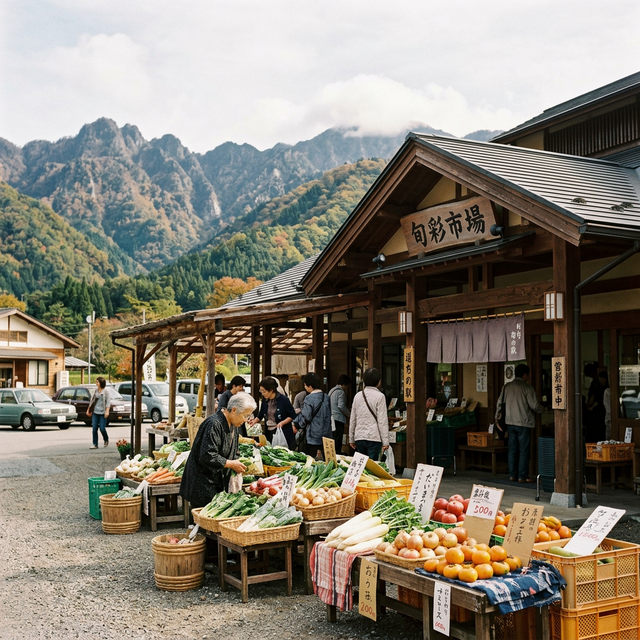
In practice, this means a Michi-no-Eki might have a farm market selling produce that never makes it to city supermarkets, a restaurant serving dishes specific to that prefecture, a craft workshop, an onsen annex, a museum, a bakery using local wheat, or a lookout point positioned specifically for the view. The 1,200+ stations vary enormously — some are modest highway rest stops, others are genuine destination experiences.
Why International Van Travelers Love Them (And Japanese Tourists Don't Notice)
For a traveler arriving from Europe, the US, or the Middle East, a Michi-no-Eki offers something genuinely unfamiliar. Consider what a roadside stop looks like in most of the world: a gas station with a small shop, maybe a fast food chain, clean-enough toilets if you're lucky. The culture of food, craft, and local specificity that defines Japanese Michi-no-Eki has no equivalent in most countries.
But there's more to it than novelty. For van travelers specifically, Michi-no-Eki solve a set of practical problems in an unusually elegant way:
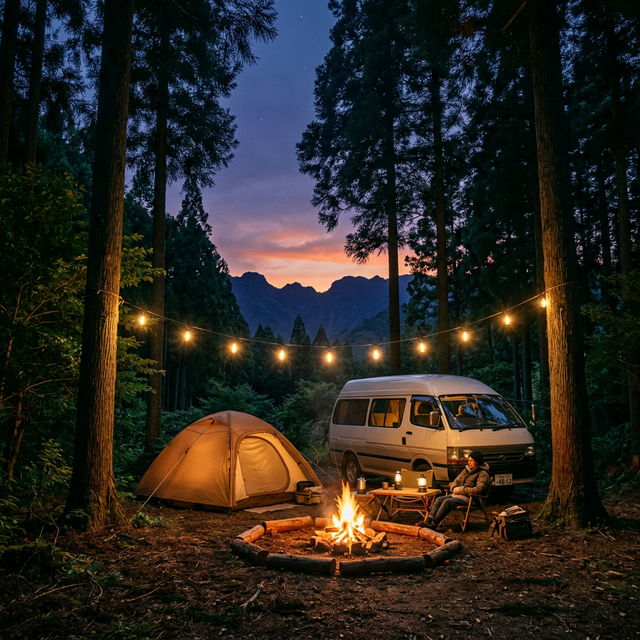
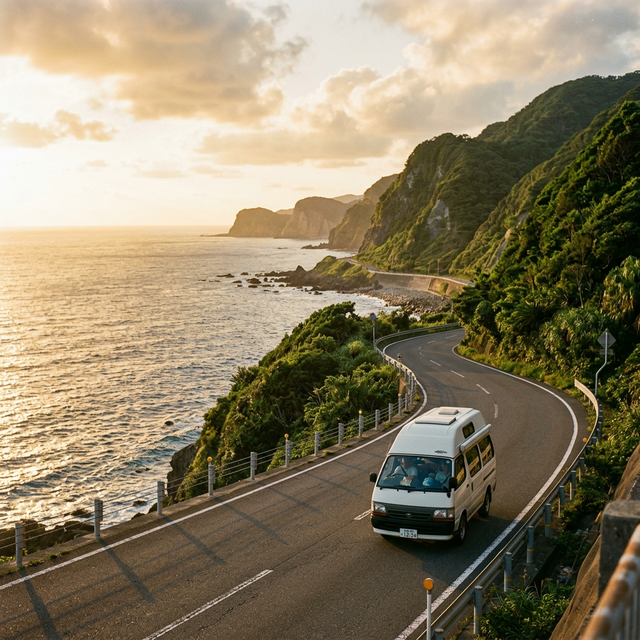
- Overnight parking: Most rural Michi-no-Eki allow van overnight stays in their car park. This is legal, free, and widely practiced. In a country where wild camping is heavily restricted, this is significant infrastructure.
- 24-hour restrooms: Clean, reliably maintained, and always open. For van life, this is the difference between a comfortable night and a logistical problem.
- Local food at source: Many Michi-no-Eki have farm markets where produce is supplied directly by surrounding farms that morning. You can buy kumquats in Miyazaki, yuzu in Kochi, or Aso milk products at the caldera rim — things impossible to find in city supermarkets.
- Cultural access without a tour: A Michi-no-Eki is self-guided, open to anyone, and free to browse. For international travelers who don't speak Japanese, it's a low-pressure way to engage with local food and craft culture.
The Best Michi-no-Eki in Kyushu for Van Travelers
Michi-no-Eki Aso (道の駅 阿蘇) — Inside the Caldera
Positioned inside the Aso caldera, this station has views of the outer rim on clear days and serves as a practical base for morning crater visits. The restaurant focuses on Aso beef and dairy products from the caldera's farms. Worth an early morning stop before the crater crowds arrive.
Michi-no-Eki Aso-bono-sato Kugino (道の駅 あそ望の郷くぎの)
On the south side of the caldera, this station has a farm market, a bakery, and a footbath. On clear days the view of the caldera rim from the parking area is one of the best free viewpoints around Aso. Popular with cycling groups on weekends.
Michi-no-Eki Phoenix (道の駅 フェニックス) — Nichinan Coast
Perched above the Nichinan Coast with direct views of the Devil's Washboard rock formations. The food building serves fresh seafood from the Miyazaki coast. A natural overnight stop for van travelers working the Miyazaki coastline south toward Kagoshima.
Michi-no-Eki Innai (道の駅 いんない) — Oita
Innai is in the Usa area of Oita, known for traditional indigo dyeing (藍染). The station has a workshop where you can watch or participate in dyeing demonstrations. One of the more distinctive cultural Michi-no-Eki in Kyushu — easy to miss on a standard route, but memorable.
Overnight Van Parking at Michi-no-Eki: Etiquette
- Park in the designated car park, not the bus area or loading zones
- Keep generator use to a minimum — most stations are quiet areas after 9pm
- Do not set up chairs, tables, or cooking equipment outside the van in the parking area
- Buy something from the station before you leave — it supports the local economy and ensures continued access for future van travelers
- If a station posts signs discouraging overnight stays (夜間駐車お断り), respect them and move on
Michi-no-Eki vs. "Rest Stops" — Why The Comparison Fails
Travelers who've driven the US Interstate system, the German Autobahn, or French autoroutes sometimes assume Michi-no-Eki are equivalent to the highway service areas they know. They're not. A few differences:
- Michi-no-Eki are almost always on non-toll national and prefectural roads, not expressways. They're part of the regular road network, not a premium highway service.
- The food is local. Not a franchise from Tokyo — produce from the farms visible from the parking lot, fish from the nearest port, products specific to that prefecture.
- They're not designed to be efficient. Browsing is the point. The variety of pickled vegetables, locally bottled sauces, seasonal sweets, and regional crafts takes time to absorb.
- Many are genuinely beautiful. Michi-no-Eki Aso望の郷 has caldera views. Michi-no-Eki Phoenix has ocean views. The location was chosen deliberately.
How to Build a Kyushu Route Around Michi-no-Eki
The most efficient approach is to use Michi-no-Eki as overnight anchors — plan your day's driving so that the station is your endpoint rather than a midday stop. This means you benefit from the market in the morning when it's freshest, and have the parking area during quieter evening hours.
A rough Kyushu loop using Michi-no-Eki as anchors:
- Night 1: Michi-no-Eki Chikugo Ogori (south of Fukuoka, easy first night)
- Night 2: Michi-no-Eki Aso or Aso望の郷 (caldera area)
- Night 3: Michi-no-Eki Hitoyoshi (near cave bath)
- Night 4: Michi-no-Eki Phoenix (Nichinan Coast)
- Night 5: Near Kirishima (combine with onsen day-use)
- Night 6: Michi-no-Eki near Unzen or Nagasaki
- Night 7: Return route toward Fukuoka
For a full breakdown of what's near each station, see our complete Michi-no-Eki guide and the 7-Day Kyushu itinerary.
Frequently Asked Questions
Can you sleep in a campervan at a Michi-no-Eki?
Most Michi-no-Eki allow overnight parking for campervans and are widely used as free overnight stops by van travelers throughout Japan. Rules vary — some stations near urban areas discourage overnight stays. In rural Kyushu, the majority are van-friendly. Park considerately, keep noise low after 9pm, and use facilities politely to ensure continued access for future travelers.
What is the best Michi-no-Eki in Kyushu for campervan travelers?
For van travelers, the standouts are Michi-no-Eki Aso (inside the caldera, excellent local food), Michi-no-Eki Aso望の郷Kugino (caldera rim views, farm market), Michi-no-Eki Phoenix on the Nichinan Coast (ocean views, fresh seafood), and Michi-no-Eki Innai in Oita (traditional indigo craft, distinctive cultural experience).
Do Michi-no-Eki have showers or laundry?
A minority have shower facilities (usually ¥200–500). Laundry is rare. The most reliable daily hygiene solution for van travelers in Japan is day-use onsen bathing (¥500–800 at most facilities), available within a short drive of almost any rural Michi-no-Eki in Kyushu. Coin laundromats are common in towns along the route.