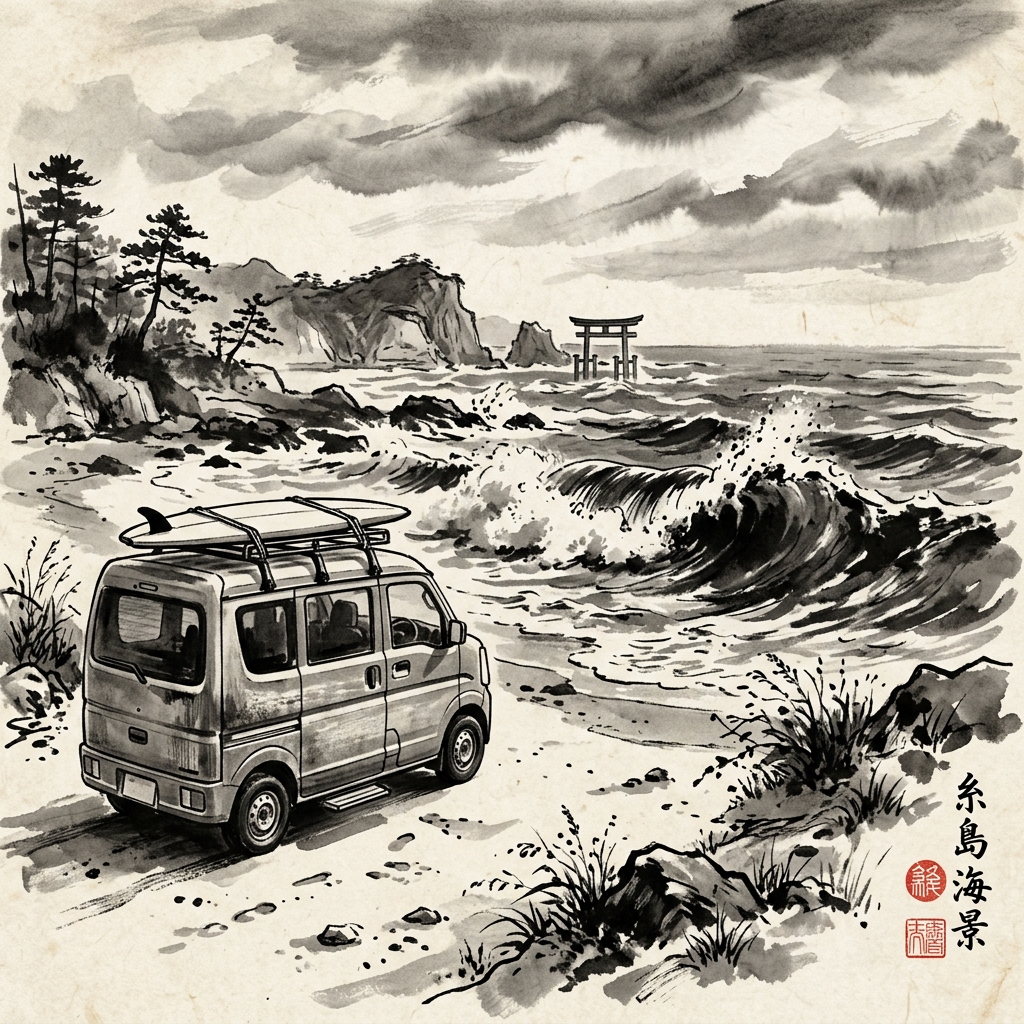
Nagasaki offers a powerful blend of WWII history, Portuguese-Dutch heritage, volcanic landscapes, and exceptional cuisine. All of it is reachable in a 2-hour drive from Fukuoka. The Shimabara Peninsula extension adds steaming volcanic hells and a ferry link to Kumamoto.
Quick Facts
| Detail | Info |
|---|---|
| From Fukuoka | 150 km, 2 hours via expressway |
| Best season | Year-round (Kunchi Festival: Oct 7-9, Lantern Festival: 5 to 21 February 2027, see our festival guide) |
| City parking | Large lots near station, 500-1,500 yen/day |
| City transport | Tram (streetcar), 140 yen per ride |
| Overnight parking | Michi-no-Eki Himawari, Minamishimabara (Shimabara Peninsula). A quiet night's rest in your vehicle is tolerated, but camping behavior is not; check the station page before you go. |
Day 1: Nagasaki City
Morning: Peace Park & Atomic Bomb Museum
Start at the Nagasaki Peace Park, the hypocenter monument marking the exact point above which the atomic bomb detonated on August 9, 1945. The Atomic Bomb Museum (approx. 200 yen) documents the event with personal artifacts, photographs, melted objects, and survivor testimonies. It is one of the most profoundly moving museums in Japan. Allow 1.5-2 hours.
Afternoon: Glover Garden & Dutch Heritage
Glover Garden (グラバー園) is a hillside park with restored Western-style mansions from the Meiji era, offering panoramic views of Nagasaki harbor. Thomas Glover, a Scottish merchant, played a key role in Japan's industrialization and is said to have inspired the story of Madame Butterfly. Entry approx. 620 yen.
Walk through Dejima (出島), the reconstructed artificial island that was Japan's only point of contact with the Western world during 200 years of isolation (1641-1853). The Dutch trading post buildings and museum explain this fascinating chapter of history. Entry approx. 520 yen.
Evening: Chinatown & Chanpon Noodles
Nagasaki's Shinchi Chinatown (新地中華街) is one of Japan's three great Chinatowns. The signature dish is chanpon, thick noodles in a rich soup with seafood, pork, and vegetables, created in Nagasaki for Chinese students. Also try sara udon (crispy noodles with thick sauce) and castella (カステラ), a sponge cake brought by Portuguese missionaries in the 16th century and now Nagasaki's iconic sweet.
Day 2: Shimabara Peninsula
Morning: Shimabara Castle Town
Shimabara Castle (島原城) is a beautifully reconstructed castle with views of Ariake Sea and Mount Unzen. Entry approx. 550 yen. The surrounding samurai district has preserved residences with clear spring water channels running through the streets. Drink the spring water only at the designated drinking spots around town, never from the channels themselves. The town is famous for koi fish swimming in the street gutters, fed by the same spring water.
Afternoon: Unzen Jigoku & Hot Springs
Drive up Mount Unzen (30 minutes from Shimabara town) to Unzen Jigoku (雲仙地獄), a volcanic area with sulfurous steam vents, boiling pools, and bubbling mud. A well-maintained walking path (free, 30-40 min loop) threads through the steaming landscape. The sulfur smell is strong but the sight is otherworldly.
After walking through "hell," soak in Unzen Onsen, where public baths cost from approx. 300-500 yen. The water is naturally heated by the same volcanic activity and said to be excellent for skin.
Evening: Ferry to Kumamoto (Optional)
The Shimabara-Kumamoto ferry departs from Shimabara Port and crosses the Ariake Sea in about 30 minutes. This is the perfect connection if your next stop is Kumamoto and Aso. You avoid backtracking through Fukuoka entirely. Fares are approximately 2,000-3,000 yen for a vehicle plus passengers. Multiple departures daily.
Nagasaki Food Not to Miss
- Chanpon (ちゃんぽん): Thick noodles in rich broth with seafood and vegetables, Nagasaki's soul food. Try at Shikairō (四海樓), the restaurant that invented it
- Sara Udon (皿うどん): Crispy thin noodles with a thick vegetable-seafood sauce poured over them
- Castella (カステラ): The sponge cake brought by Portuguese missionaries in the 1500s. Fukusaya is the most famous maker (founded 1624)
- Turkish Rice (トルコライス): A Nagasaki-only creation: spaghetti, pilaf, and tonkatsu on one plate. Found at kissaten (traditional cafes)
- Guzoni (具雑煮): Shimabara's signature dish, mochi rice cakes in a rich dashi broth with over a dozen ingredients
Frequently Asked Questions
Is Nagasaki hilly? Is it hard to walk around?
Yes, Nagasaki is built on steep hills, and many attractions are connected by slopes and stairs. The tram (streetcar) system covers the main sightseeing areas and is the easiest way to get around. A one-day tram pass costs 600 yen for unlimited rides.
Can I combine Nagasaki with Huis Ten Bosch?
Huis Ten Bosch is a Dutch-themed park in Sasebo, about 1.5 hours from Nagasaki city. It is popular for its illumination events. You can combine it with a Nagasaki trip, though it adds a full day.
Related Articles
- Kumamoto & Aso: 3-Day Itinerary
- Kyushu drives locals love
- 7-Day Kyushu Road Trip
- Japanese Hot Springs Guide
- Kyushu Trip Budget
History, volcanoes, and ramen: 2 hours from Fukuoka
Campervan from ¥22,000/day with insurance and camping gear. Ferry link to Kumamoto available.
View Rental Options → 💬 Ask on WhatsAppFrequently asked questions
How many days do I need in Nagasaki?
2-3 days is ideal. Day 1 for Nagasaki city (Peace Park, Atomic Bomb Museum, Glover Garden, Chinatown). Day 2 for Shimabara Peninsula (Shimabara Castle, Unzen hot springs, Unzen Jigoku hells). Optional Day 3 for the coastal drive or ferry to Kumamoto across Ariake Sea.
Can I drive a campervan in Nagasaki city?
Yes, but Nagasaki city is built on steep hills with narrow streets. We recommend parking at one of the large paid parking lots near Nagasaki Station or Peace Park (approx. 500-1,500 yen/day) and using the tram (streetcar) to get around the city. The tram costs only 140 yen per ride. After exploring the city, drive to Shimabara for the scenic portion.
What is the Atomic Bomb Museum like?
The Nagasaki Atomic Bomb Museum is one of the most moving museums in Japan. It documents the August 9, 1945 bombing with personal artifacts, photographs, and survivor testimonies. Entry is approx. 200 yen. Allow at least 1.5-2 hours. Combined with the adjacent Peace Park and hypocenter monument, this is an essential historical experience.
What is Unzen Jigoku?
Unzen Jigoku (Unzen Hell) is a volcanic hot spring area on the Shimabara Peninsula where sulfurous steam vents, boiling pools, and bubbling mud pits create a dramatic, otherworldly landscape. A well-maintained walking path (free, 30-40 min loop) threads through the steaming vents. The nearby town of Unzen has public hot springs from 300 yen.
Is Shimabara worth visiting?
Absolutely. Shimabara is a beautifully preserved castle town with a restored castle (entry approx. 550 yen), samurai residences with spring-water channels running through the streets (free), and excellent local cuisine including guzoni (mochi soup) and kanzemushi (sweet bean dessert). It is far less crowded than Nagasaki city.
Can I take a ferry from Shimabara to Kumamoto?
Yes. The Shimabara-Kumamoto ferry crosses the Ariake Sea in about 30 minutes. Fares are approximately 2,000-3,000 yen for a passenger vehicle plus passengers. This is a great way to connect Nagasaki and Kumamoto without backtracking through Fukuoka. The ferry runs multiple times daily. Book at the port or by phone.