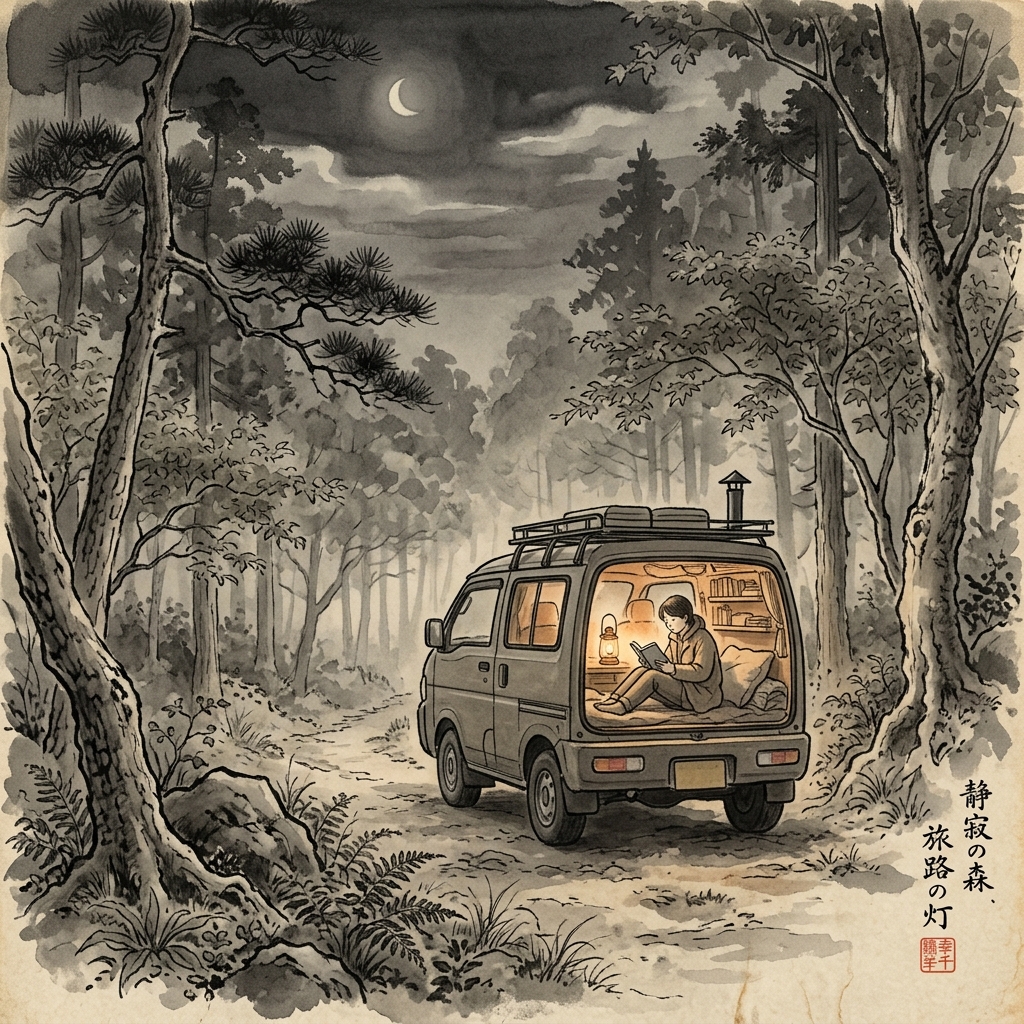
Long drives through Japan's beautiful countryside can be tiring — especially on winding mountain roads. Knowing where and how to rest is essential for a safe, respectful road trip.
Option 1: Michi-no-Eki (Road Stations) — Free
Japan has over 1,200 Michi-no-Eki across the country. These government-designated rest areas offer free parking, clean restrooms, and often local produce shops.
What's Available
- Free parking (24/7)
- Clean restrooms
- Vending machines
- Local food and souvenir shops (usually 9:00-17:00)
- Sometimes: onsen, restaurants, playgrounds
⚠️ The Overnight Rule
Michi-no-Eki parking lots are officially for temporary rest only. They are not campgrounds.
"Michi-no-Eki are rest facilities for drivers who are tired. Staying overnight for accommodation purposes is not the intended use."
— Ministry of Land, Infrastructure, Transport and Tourism
Sleeping in your vehicle when genuinely tired is generally tolerated. But there's a clear line:
✅ Acceptable (Resting)
- Sleeping in your vehicle with curtains drawn
- Arriving in the evening, departing in the morning
- Using the restroom facilities
❌ Not Acceptable (Camping)
- Setting up chairs, tables, or awnings outside
- Cooking outside your vehicle
- Doing laundry in restroom sinks
- Staying multiple nights at the same station
- Running your engine or generator overnight
🚐 Our campervans are designed for comfortable Michi-no-Eki stays
Privacy curtains, USB fans, portable power — all included
Everything you need to rest comfortably and discreetly. All-inclusive from ¥22,000/day.
Option 2: Paid Parking Lots
- Coin parking — Automated lots in cities. ¥100-300/20 minutes.
- Multi-story garages — Check height limits for campervans (usually max 2.1m).
- Hotel/ryokan parking — Often included with accommodation.
Important: Never park in supermarket or convenience store lots for extended periods. This may result in towing.
The Three Essential Rules When Parked
🔑 Always Follow These Rules
- Turn off your engine — Idling is noisy, polluting, and often illegal.
- Turn off your headlights — Bright lights disturb people resting nearby.
- Keep noise to a minimum — Especially after 21:00.
Frequently Asked Questions
Are Michi-no-Eki free to use?
Yes. Parking and restrooms are free 24/7. Shops and restaurants inside have regular operating hours (usually 9:00-17:00). Some Michi-no-Eki also have onsen facilities with a separate entrance fee (typically ¥500-800).
Can I cook in my campervan at a Michi-no-Eki?
Cooking inside your vehicle with the doors closed is generally fine. Cooking outside with a camp stove, setting up tables, or using an awning is not acceptable — this crosses the line from "resting" to "camping."
Where can I find Michi-no-Eki?
Search "道の駅" on Google Maps, or use the official Michi-no-Eki app (in Japanese). There are over 1,200 across Japan, with the highest concentration in rural areas. Our team can recommend the best stops along your specific route.
Is it illegal to idle my engine in Japan?
Many prefectures have idling prohibition ordinances. Even where not explicitly illegal, idling is considered very inconsiderate — the noise and exhaust disturb nearby people. Always turn off your engine when parked.
← Back to The Complete Japanese Manners Guide | Also read: Driving Rules & Manners →